
Reno knows wildfire smoke
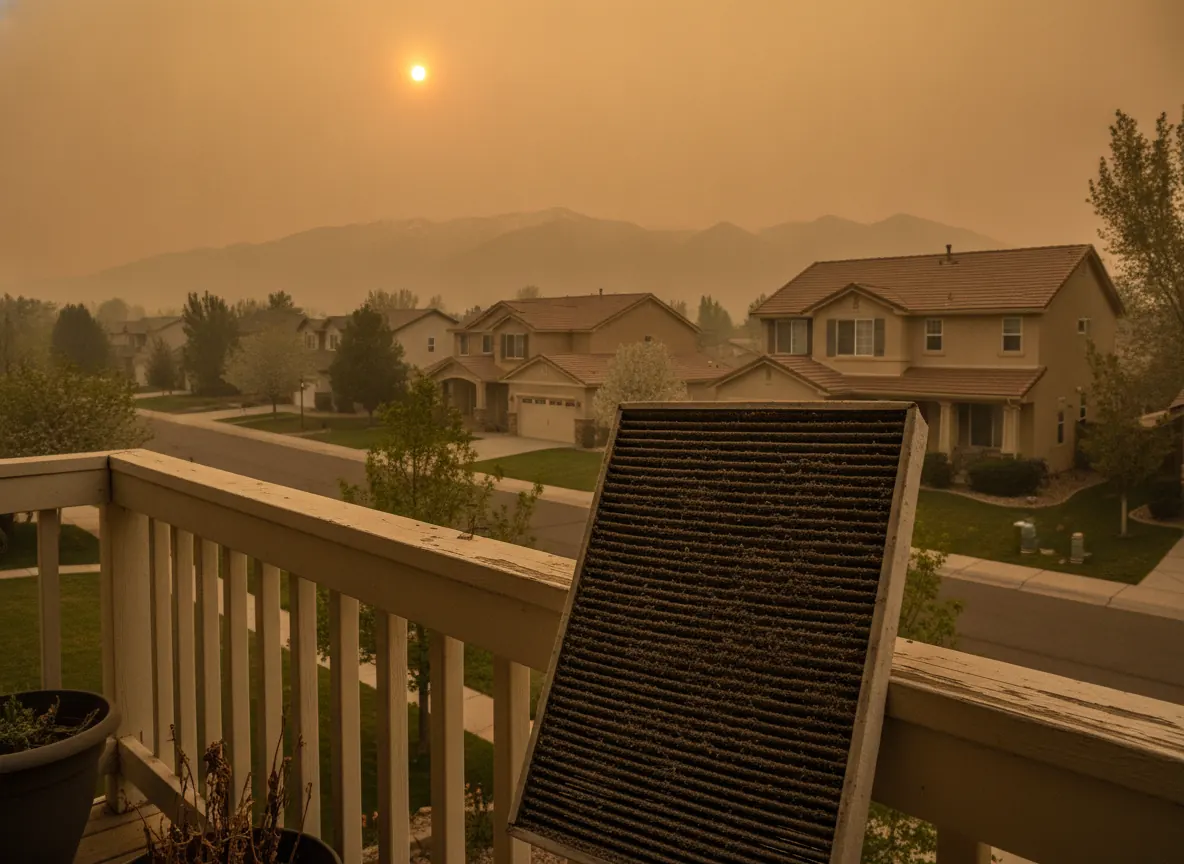
Smoke from California and Nevada fires has shut Reno residents indoors more than once. In late August 2021, smoke from the Caldor Fire led the Washoe County Health District (now Northern Nevada Public Health, or NNPH) to declare its first-ever Stage 3 emergency air quality episode. The county's average fine-particle AQI hit 291 on Monday, August 23, 2021, the worst air quality the county had ever recorded, according to CNN's report at the time. KOLO later reported that residents lived with smoke for 71 days that year. EPA's monitor data for Washoe County also shows smoke spikes in September 2020 and September 2022, and in September 2024 the Davis Fire in southern Washoe County pushed monitors there into the "Unhealthy" range.
During those events, health officials told people to stay inside with the windows shut. That means the air in your home is the air your HVAC system moves and filters. Here is how to make that system work for you.
During the smoke: what EPA and local health officials advise
1. Use a MERV 13 filter, or the highest your system can take
EPA's wildfire and indoor air quality page (last updated September 2, 2026) says: "Choose a high-efficiency HVAC filter, such as one with a Minimum Efficiency Reporting Value (MERV) 13 rating, or as high a rating as your system fan and filter slot can accommodate. Make sure the filter fits snugly so air does not leak around the filter. Do not bend or crush the filter to make it fit." EPA adds that "You may need to consult a professional HVAC technician to determine the highest efficiency filter that your system can accommodate."
A higher-rated filter catches more fine smoke particles, but it also loads up faster during heavy smoke. Check it often and replace it when it looks dirty.
2. Close the fresh-air intake and run on recirculate
For central HVAC, EPA says to "find out if it has a fresh air intake. If it does, learn how to close it or turn the system to 'recirculate' mode." Washoe County's August 2020 smoke alert gave the same advice locally: "Stay indoors with the windows and doors closed; if possible, run the air conditioner on recirculation function."
3. Go easy on the swamp cooler
Evaporative coolers pull outdoor air into the house, which is why they work so well in Reno's dry summers and why they are a problem in smoke. Washoe County's advice in 2020: "Avoid using a swamp cooler or whole-house fan to prevent bringing additional smoke inside."
EPA offers one option for people who must run one: "If you have an evaporative cooler and can safely access it, completely cover the outside air intakes with 4-inch-thick high-efficiency (MERV 13) furnace filters. Note: the external filters may need to be replaced frequently due to wind or rain damage. If you cannot do this, use the evaporative cooler sparingly during smoky conditions because it can bring more smoke inside." Only do this if you can reach the cooler safely. Our swamp cooler service page covers seasonal maintenance.
4. Keep indoor air clean
During the 2024 Davis Fire, NNPH advised: "Do not vacuum, light candles, fry food, or smoke," and recommended creating a clean-air room. A Washoe County air quality specialist also told residents in 2021 to replace the air filter in their air conditioning unit and keep windows closed.
After the smoke clears: a sensible order of steps
- Replace the filter. The filter that ran through a smoke event has done its job. Put in a fresh one, again MERV 13 or the highest your system can take.
- Clean up ash carefully. EPA says to avoid dry sweeping and, "If you choose to vacuum dusty surfaces, use a high-efficiency particulate air (HEPA)-type vacuum." EPA also says "Children, older adults, and people with heart or lung diseases, such as asthma, should not participate in cleanup work."
- Check the swamp cooler pads. If the cooler ran during smoke or ash fall, its pads and reservoir may need attention before next season.
- Run the system and pay attention. Is there still a smoke smell when the blower starts? Is dust or ash coming out of the supply registers? Pull a register and look inside.
Duct cleaning after wildfire smoke: what EPA actually says
This is the part many sales pitches skip. EPA's wildfire page says: "You may consider having your air ducts cleaned after a fire, but EPA recommends that air ducts only be cleaned as needed. For example, you should consider having the ducts cleaned if you find that your ducts are clogged with excessive amounts of dust and debris and/or particles are actually released into your home from the supply registers."
Neither EPA nor NNPH tells homeowners to clean their ducts after every smoke event, and we did not find any local health guidance that recommends it. The filter and recirculation advice comes first. If smoke odor or ash persists after filter changes, some homeowners have their system inspected. An inspection can show whether the ducts, blower or coil are actually holding debris, or whether a fresh filter has already solved the problem.
Will duct cleaning get rid of smoke smell?
Honestly, it depends on where the smell is coming from. If ash or soot settled inside the ducts, blower or coil, cleaning those parts may help. If the odor is in carpets, furniture or drywall, duct cleaning will not reach it. That is why the inspection step matters: ask the company to show you the contamination before you agree to the work, as EPA advises for any duct cleaning.
Be careful with add-ons sold as "smoke odor treatments." Some involve chemical fogging or ozone. EPA notes that chemical biocides are regulated as pesticides, that "research has not demonstrated their effectiveness in duct cleaning," and that "Ozone is a highly reactive gas that is regulated in the outside air as a lung irritant." Any treatment should only be applied, if at all, after the system has been properly cleaned. Whether to ask about one is your choice. If you do, ask to see the product label.
Smoke and your health
Wildfire smoke is a health issue, and nothing about duct cleaning changes that. EPA says duct cleaning "has never been shown to actually prevent health problems." Follow NNPH's air quality alerts and the EPA steps above during smoke events. If you or someone in your home has symptoms, or has heart or lung disease, talk to a doctor.
What a post-smoke cleaning may cost
There is no reliable national price for wildfire smoke cleanup specifically, so we do not publish one. For general duct cleaning, EPA and NADCA put typical whole-system work at $450 to $1,000, and cost guides report averages of about $389 to $500. These are estimates, not quotes. See our air duct cleaning cost guide for more detail. If a cleaning is needed, a thorough job includes the blower and coil, which are covered on our furnace, coil and blower cleaning page.
Before you hire anyone after a fire
After a smoke event, take your time. Get at least three written estimates, insist on a written scope, and be wary of anyone who claims to be EPA certified. EPA does not certify duct cleaners. Nevada requires contractors to show their license number in their ads, so check any company on the NSCB license search before you hire. Our guide to spotting a $99 duct cleaning scam lists the red flags.
Reno Air Duct Cleaning is a free referral service. We connect Reno-area homeowners with independent local duct cleaning and HVAC companies for free, no-obligation quotes. We don't do the work ourselves. Whichever company you talk to, check its license on the Nevada State Contractors Board (NSCB) license search before you hire.
If smoke odor or ash is still hanging around after you have changed filters, you can get free quotes from local companies for an inspection. Read more on our wildfire smoke HVAC cleaning page.