
Wildfire Smoke HVAC Cleaning in Reno
What official guidance says to do with your furnace, AC and swamp cooler during smoke season, and when a system inspection may make sense afterward. Compare free quotes from independent local companies.
Get a Free Quote Call (727) 300-6656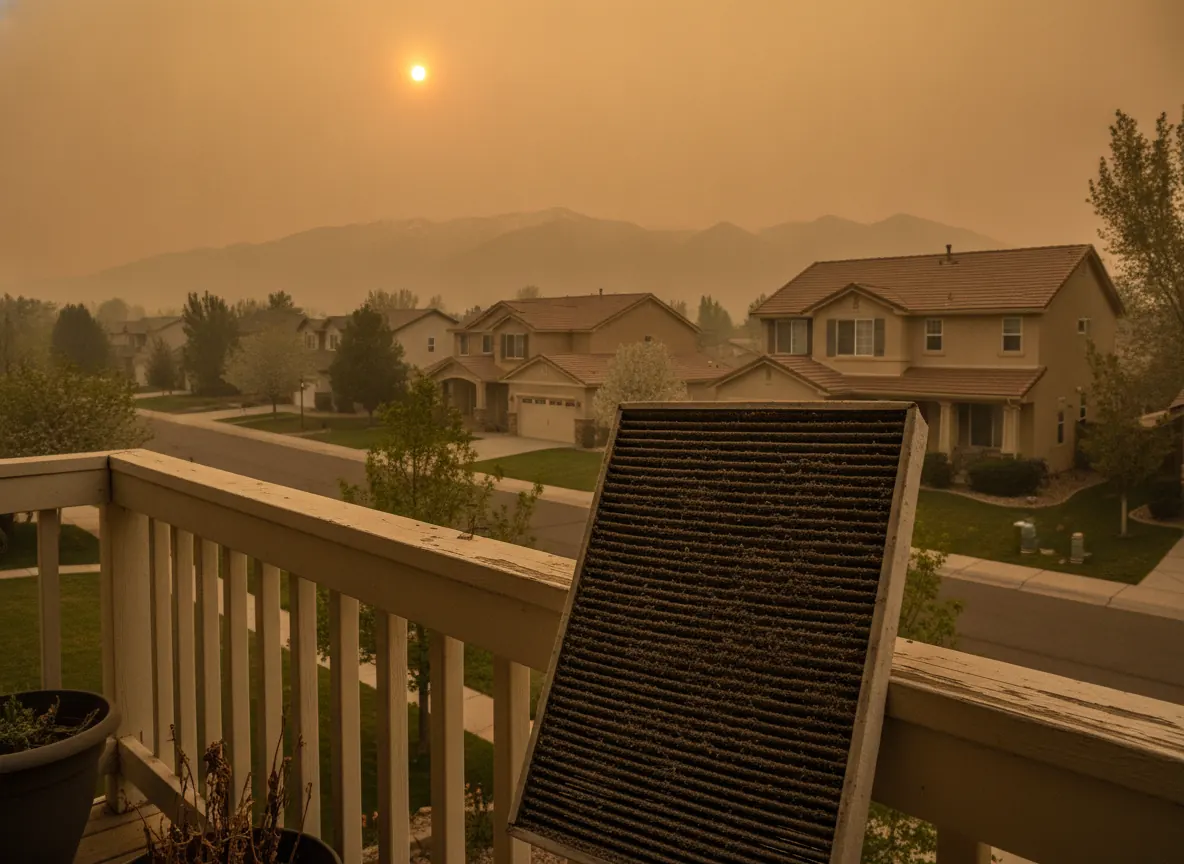
Reno’s recent smoke seasons
Wildfire smoke from California and the Sierra has hit the Truckee Meadows hard in recent years. A few documented episodes:
- August 2020: the Washoe County Health District issued a Stage 1 Air Pollution Alert on August 20 for smoke from fires in the Plumas and Mendocino National Forests and the Loyalton Fire. EPA AirData shows Washoe County’s 2020 peak daily AQI of 265 on September 13.
- August 2021 (Caldor Fire): the Health District declared its first-ever Stage 3 emergency air quality episode. CNN (via KTVZ) reported an average fine-particle AQI of 251 on August 22 and 291 on August 23, the worst air quality the county had ever recorded. KOLO later reported that residents lived with smoke for “71 days” that year.
- September 2022: EPA AirData shows Washoe County above AQI 150 from September 10 to 17, peaking at 259 on September 14.
- September 2024 (Davis Fire): Northern Nevada Public Health (NNPH, formerly the Washoe County Health District) issued an air quality advisory on September 7 as southern Washoe monitors reached “Unhealthy.”
What the official advice says to do during smoke
Local and federal guidance lines up on a few steps. None of them is duct cleaning.
Close up and recirculate
The Washoe County Health District’s August 2020 alert said: “Stay indoors with the windows and doors closed; if possible, run the air conditioner on recirculation function.” EPA says to find out whether your central system has a fresh air intake and, if it does, “learn how to close it or turn the system to ‘recirculate’ mode.”
Upgrade the filter
EPA recommends “a high-efficiency HVAC filter, such as one with a Minimum Efficiency Reporting Value (MERV) 13 rating, or as high a rating as your system fan and filter slot can accommodate.” It should fit snugly; don’t bend or crush it to fit. EPA adds that “you may need to consult a professional HVAC technician” to find the highest-efficiency filter your system can handle.
Go easy on the swamp cooler
The Health District advised: “Avoid using a swamp cooler or whole-house fan to prevent bringing additional smoke inside.” EPA says that if you can safely reach it, “completely cover the outside air intakes with 4-inch-thick high-efficiency (MERV 13) furnace filters,” which may need frequent replacement; otherwise, use the cooler “sparingly during smoky conditions because it can bring more smoke inside.” See swamp cooler service.
Keep indoor air clean
During the 2024 Davis Fire advisory, NNPH said: “Do not vacuum, light candles, fry food, or smoke,” and suggested setting up a clean-air room.
After the smoke clears
Once air quality improves, EPA’s wildfire guidance covers cleanup:
- Avoid dry sweeping ash. “If you choose to vacuum dusty surfaces, use a high-efficiency particulate air (HEPA)-type vacuum.”
- “Children, older adults, and people with heart or lung diseases, such as asthma, should not participate in cleanup work.”
- Replace the HVAC filter that worked through the smoke event.
On ducts, EPA is careful: “You may consider having your air ducts cleaned after a fire, but EPA recommends that air ducts only be cleaned as needed. For example, you should consider having the ducts cleaned if you find that your ducts are clogged with excessive amounts of dust and debris and/or particles are actually released into your home from the supply registers.”
When an inspection may make sense
If smoke odor or ash persists after filter changes, some homeowners have their system inspected. Examples might be a smoky smell that returns whenever the furnace or AC runs, or ash and grit coming from supply registers, which matches one of EPA’s triggers for considering cleaning.
An inspection lets a company look inside the ducts, the blower and the coil and show you what is there. EPA’s general advice applies: ask the company to show you the contamination that would justify cleaning, get written estimates from at least three providers, and be wary of anyone making sweeping health claims. EPA says duct cleaning “has never been shown to actually prevent health problems.” If smoke has affected anyone’s health, talk with a doctor.
If cleaning is warranted, NADCA describes source removal under negative pressure with HEPA-filtered collection; see air duct cleaning and furnace and coil cleaning. Some companies also offer deodorizing or fogging; EPA cautions that biocides should only be applied, if at all, after the system has been properly cleaned, and only per the label.
What it costs
There is no reliable published price for smoke-related HVAC cleanup, so we don’t list one. It depends on what an inspection finds. For general duct cleaning ranges, see the cost guide, and for a deeper read, wildfire smoke and your HVAC in Reno.
Reno Air Duct Cleaning connects Reno-area homeowners with independent local duct cleaning and HVAC companies for free, no-obligation quotes. We don’t do the work ourselves. Nevada requires contractors to show their license number in their ads; check any company on the NSCB license search before you hire. Request free quotes.
Frequently asked questions
Do health agencies recommend duct cleaning after wildfire smoke?
No. EPA says you “may consider” duct cleaning after a fire but recommends cleaning ducts “only as needed,” for example when they are clogged with excessive dust and debris or particles come out of supply registers. Northern Nevada Public Health’s smoke advice focuses on closing up the home, recirculating and changing filters. No local agency guidance on duct cleaning was found.
What filter should I use during smoke season?
EPA suggests a high-efficiency filter such as MERV 13, or as high a rating as your system fan and filter slot can accommodate. The filter should fit snugly without bending or crushing. EPA notes you may need an HVAC technician to tell you the highest-efficiency filter your system can handle, and filters loaded with smoke need changing more often.
Should I run my swamp cooler when it’s smoky?
Washoe County’s health district has advised residents to avoid using a swamp cooler or whole-house fan during smoke so they don’t pull more smoke inside. EPA says that if you can safely do it, cover the cooler’s outside air intakes with 4-inch MERV 13 furnace filters; otherwise use the cooler sparingly in smoky conditions.
My house still smells like smoke. What now?
Start with the basics: replace the HVAC filter, wipe surfaces, and use a HEPA vacuum instead of dry sweeping, as EPA advises. If smoke odor or ash persists after filter changes, some homeowners have their system inspected. Ask any company to show you what it finds before agreeing to cleaning, and get the scope and price in writing.
Is smoke cleanup safe for everyone to do?
EPA says children, older adults, and people with heart or lung diseases such as asthma should not take part in ash cleanup work. If anyone in your home has symptoms or health concerns related to smoke, talk with a doctor. Duct cleaning has never been shown to prevent health problems, according to EPA.
Dusty vents or smoke smell? Compare duct cleaning quotes.
Free, no-pressure quotes across Reno, Sparks, Spanish Springs and the Truckee Meadows.